
Last updated October 30, 2026
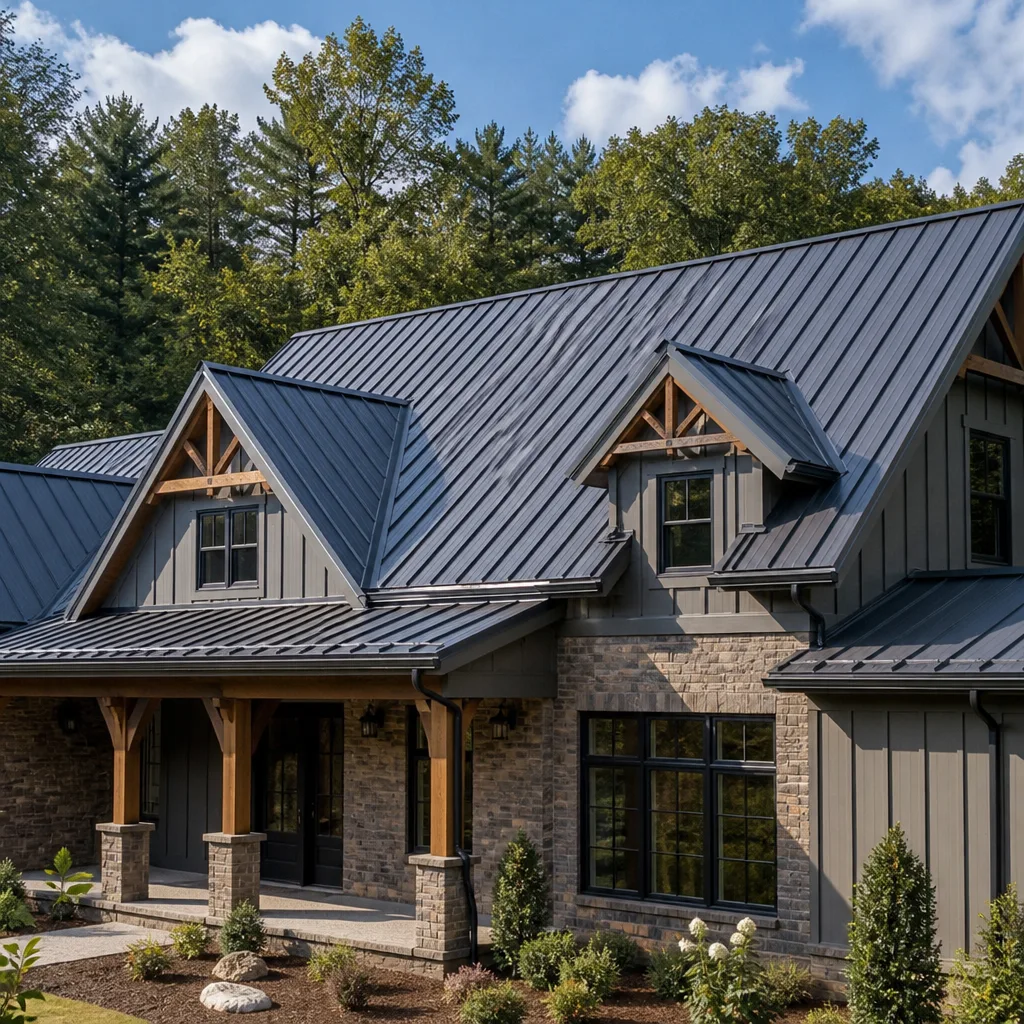 Metal roofing
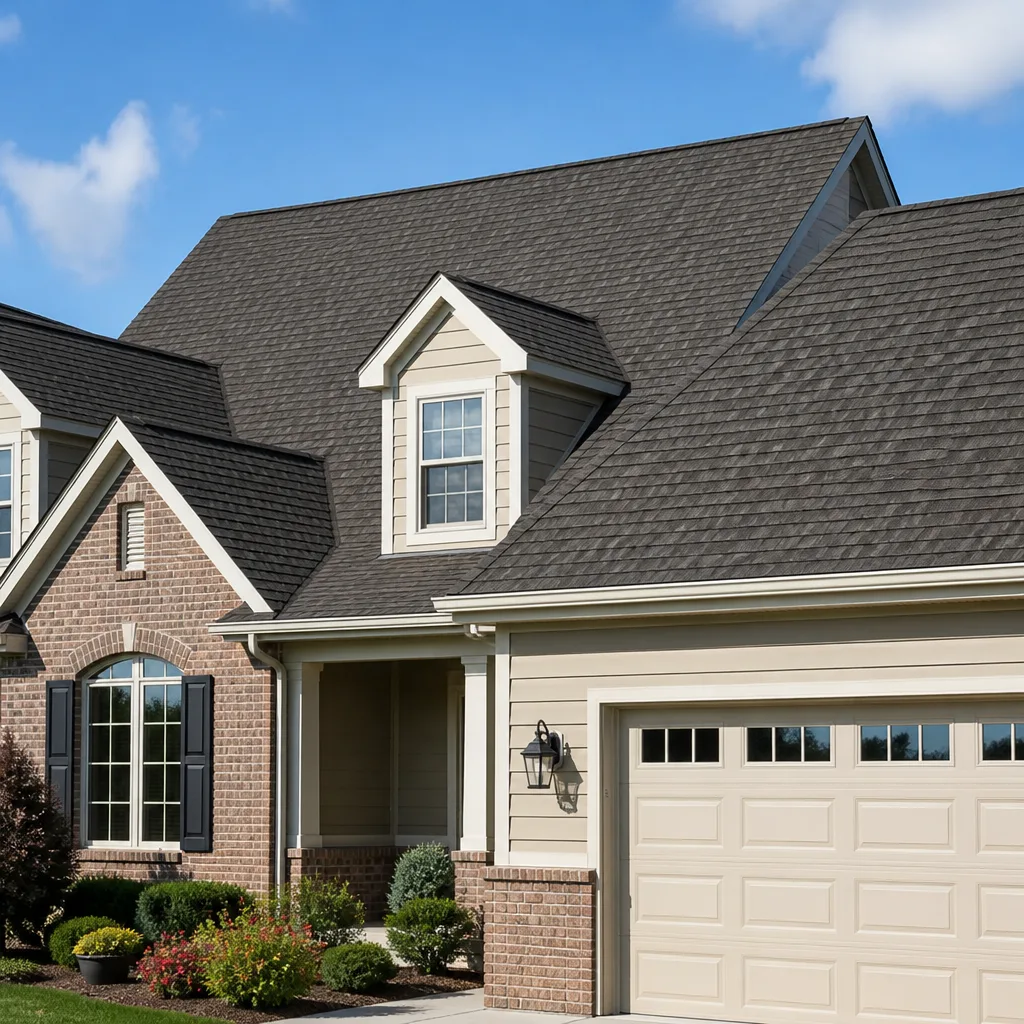 Architectural shingles
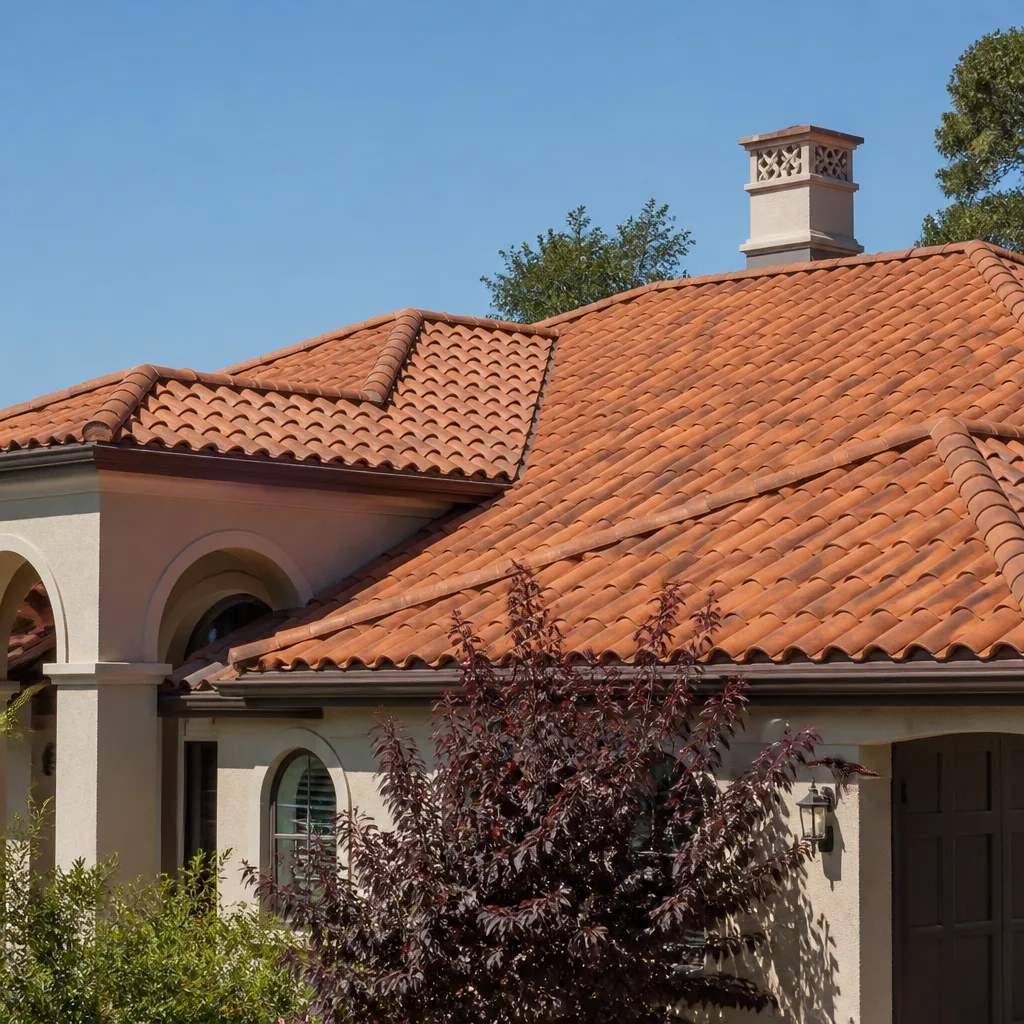 Tile roofing
 GAF
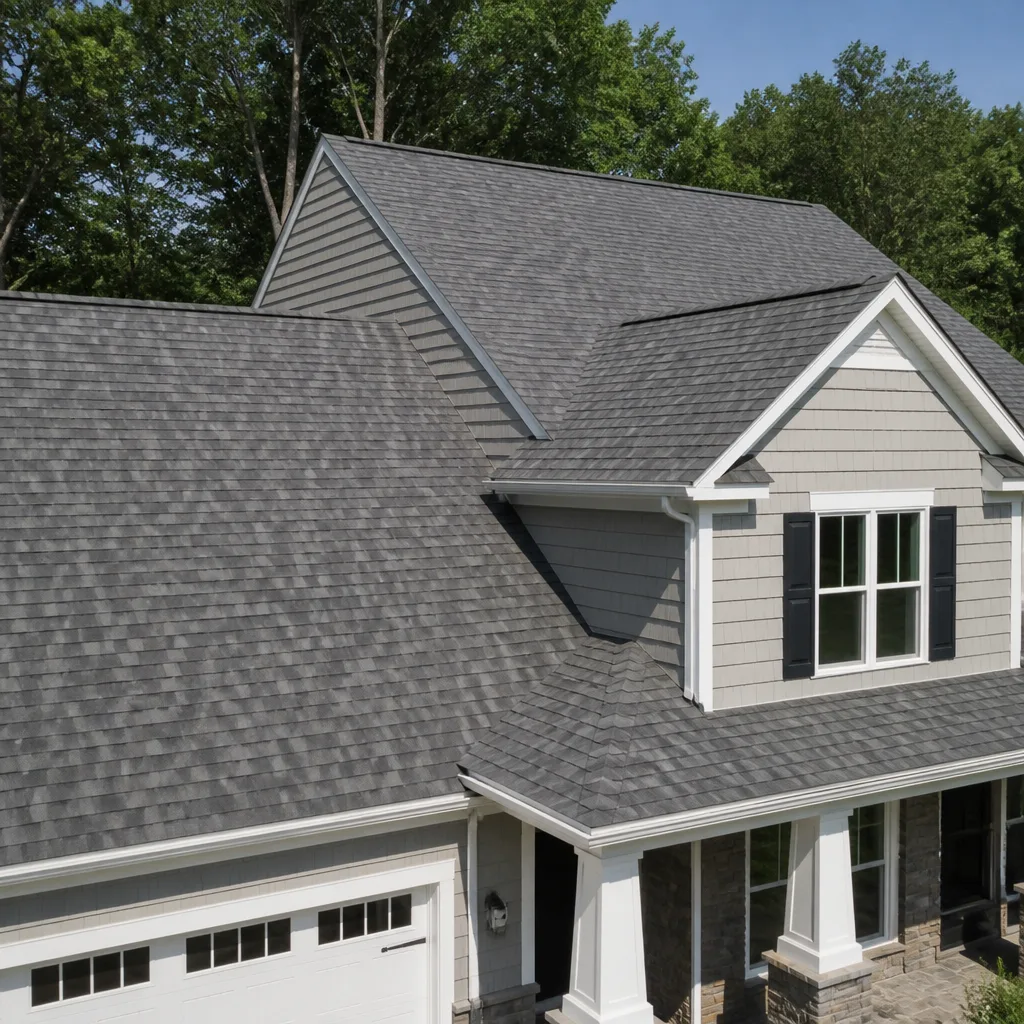 Owens Corning
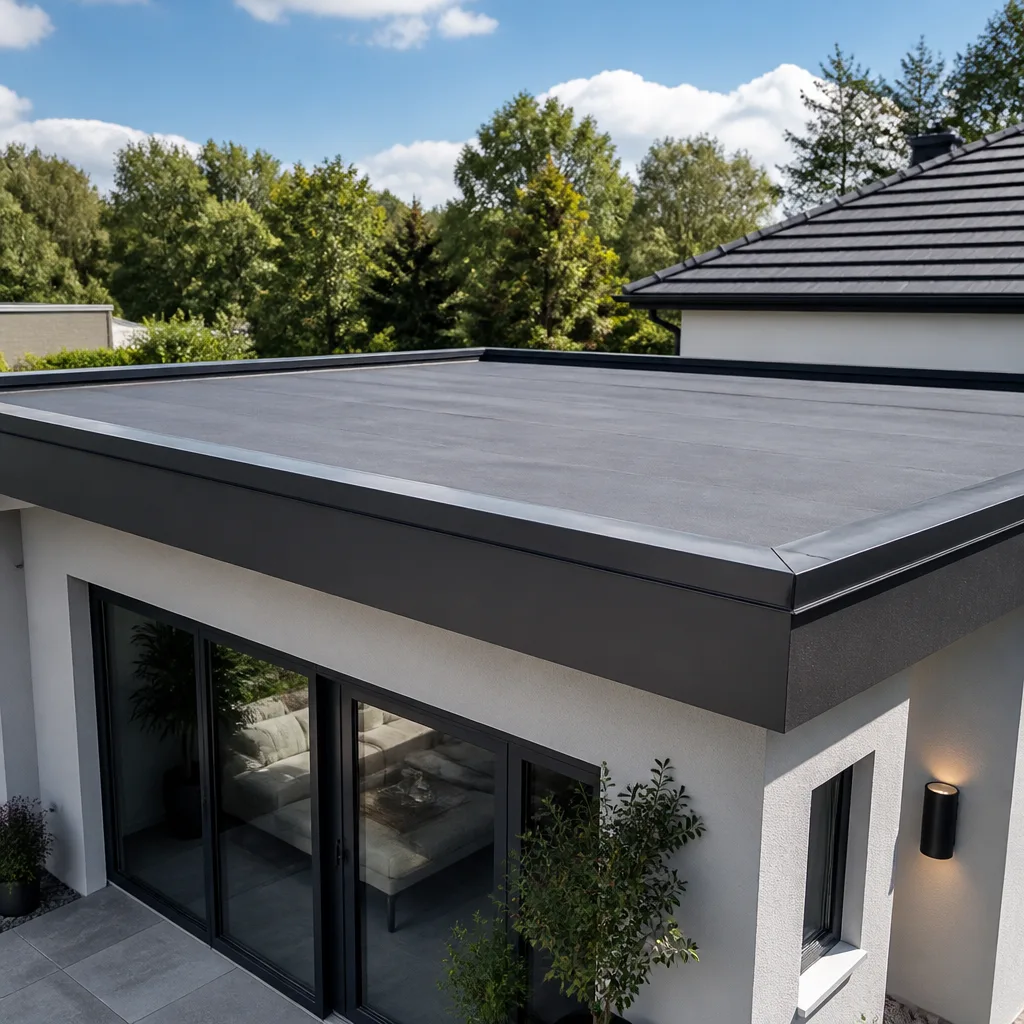 Flat & low-slope
Free roof inspection with deck photos before we talk money - GAF and Owens Corning certified installation
How to Hire a Roofing Contractor in Westminster: A Step-by-Step Guide
Here’s a number that should make every Westminster homeowner pause: California’s Contractors State License Board (CSLB) receives thousands of roofing complaints each year, and the most common thread running through them isn’t missing paperwork. It’s that the work was done by someone who was never really a roofing specialist to begin with. A general contractor who “also does roofs” treats your roof like a line item. A dedicated roofer treats it like the only thing that matters. This guide and our Roof Repair Troubleshooting: Common Problems and How to Fix Them resource give you a vetting framework built around roofing-specific competency signals, so you can tell the difference before you sign anything.
Quick Answer
To hire a roofing contractor in Westminster, verify a C-39 roofing license (not just a general B license), ask five roofing-specific technical questions that generalists can’t answer, read the estimate line by line for material specifics and underlayment specs, cap your deposit at 10% or $1,000 per California law, and get the draw schedule in writing. Start with a standalone inspection—our Roof Repair Maintenance Checklist for Westminster Homeowners can help—so the recommendation you receive is tied to your actual roof condition, not a sales target.
Styles & brands we work with
Table of Contents
- What License Should a Westminster Roofer Have? C-39 vs. B Explained
- Five Interview Questions That Separate Roofing Specialists from Generalists
- How to Read a Roofing Estimate Line by Line
- Why the Lowest Bid in Westminster Is Usually a Materials Swap
- Payment Schedules and California’s Deposit Cap Law
- Why You Should Start with an Inspection, Not a Sales Pitch
- Matching Materials to Westminster’s Climate
- Questions to Ask Before You Sign
What License Should a Westminster Roofer Have? C-39 vs. B Explained
California issues two licenses that matter in this conversation, and they are not interchangeable. The C-39 is a roofing-specific classification. To hold it, a contractor must demonstrate four years of journey-level roofing experience, pass a trade-specific exam that covers everything from low-slope membrane systems to shingle installation patterns, and maintain that classification through continuing education. The B, by contrast, is a general building contractor license, and while a B license allows someone to take a roofing project legally, it does not prove they know how to roof.
Why does this distinction matter when a repair fails? Because accountability flows through the license. When a C-39 holder does substandard work, the CSLB complaint process lands on a contractor whose entire professional identity is roofing. There’s no “well, we mainly do kitchens” defense. When a general contractor’s roofing trade fails, you’re often dealing with a company whose focus is elsewhere, and the subcontracted crew that actually did the work is two layers removed from your contract. In Westminster, where a significant portion of the housing stock dates back to the post-war building boom, we’ve seen roofs that were replaced by general contractors within the last decade already showing fastener problems, flashing failures at transition points, and underlayment breakdown that a C-39 specialist would have caught at installation.
Here’s the practical checklist:
- Verify the license number on the CSLB website. Don’t take the number printed on the truck at face value. The CSLB database shows the classification, the issue date, and any disciplinary history.
- Confirm the classification is C-39, not B, if the primary scope is roofing. A hybrid B with roofing experience can be fine, but you’ll need to probe harder on the technical questions below.
- Check for workers’ compensation coverage. In California, roofers are required to carry workers’ comp if they have employees. Ask for the policy number and verify it with the carrier, or at least confirm the contractor will provide a certificate of insurance before work starts.
- Ask who will actually be on the roof. Some companies sell the job and then subcontract the labor. If the crew is subcontracted, ask for the subcontractor’s license number too.
For more on what a Westminster roofing repair actually involves, see our guide to Roof Repair in Westminster.
Five Interview Questions That Separate Roofing Specialists from Generalists
The license check filters out the obvious non-starters. The interview is where you separate the roofer who lives in the trade from the one who just knows how to sell it. These five questions are specific enough that a general contractor will fumble them, but any competent roofer in Westminster will answer without hesitation.
- “What’s your fastening pattern for high-wind zones?” Westminster sits in a region where the building code specifies wind uplift requirements for roof assemblies. A specialist will reference the manufacturer’s current requirement, usually six nails per shingle in high-wind areas and sometimes a wider nailing pattern for certain materials. A generalist will either default to “standard code” or stumble. There is no “standard” answer that covers every manufacturer and every roof deck. The answer should be specific to the product being proposed.
- “What underlayment do you spec for a tile roof versus a composition shingle roof?” These are different systems with different requirements. A roofer who has actually worked with both will tell you that tile roofs often call for a high-temperature-rated synthetic underlayment or a two-ply system, while a shingle roof may use a single layer of synthetic or felt per manufacturer specs. The point is the contrast: if they treat underlayment as an afterthought, that’s a signal.
- “How do you handle the transition where the roof meets a stucco wall on a Westminster rancher?” This is a house-specific detail that most Westminster homes have. The correct answer involves step flashing or a let-in flashing detail, not just “we caulk it.” Watch for a contractor who gives you a real flashing answer versus one who hand-waves.
- “What’s your process when you find rotted decking under the old roof?” The honest answer is: we stop, photograph it, show you the board, and get a written change order before replacing it. The wrong answer is: we just replace it and add it to the final bill. This question reveals how a contractor handles surprises and money.
- “Which manufacturers do you hold certifications with, and can I see the credential?” Many manufacturers offer installer certification programs. GAF, CertainTeed, and Owens Corning all have credential tiers. A roofer who carries certifications from multiple manufacturers has demonstrated training beyond the CSLB requirement. A roofer who says “we work with all of them” without naming a single certification may not actually be authorized to offer manufacturer-backed warranties.
In our experience at Select Roof Repair, the contractors who answer these questions well are the ones who treat roofing as a body of knowledge, not just a job site. That’s also why we recommend working with a company that operates across inspection, repair, and replacement, because you get the diagnosis before you get the pitch. You can learn more about our approach on our Select Roof Repair home page.
How to Read a Roofing Estimate Line by Line
A roofing estimate is not a price tag. It’s a specification document, and the difference between a good one and a lazy one is visible in the details. Here’s what to look for, line by line, and what each line’s absence or vagueness tells you.
The Tear-Off and Haul Line
If the estimate says “tear-off and haul” without specifying the number of layers being removed, whether the old material will be disposed of at a licensed facility, and whether the dump fees are included, you’re looking at an estimate that invites change orders later. A precise estimate will say something like: “Remove existing single layer of composition shingles, felt, and battens; haul to licensed disposal facility; dump fees included.” Vagueness here is a signal the contractor either hasn’t looked closely at your roof or plans to charge you extra when reality asserts itself.
Underlayment Specification
The underlayment is not a commodity line item. A real estimate will name the product: “CertainTeed RoofRunner synthetic underlayment” or “GAF Deck-Armor” or “Owens Corning ProArmor.” It will also specify the installation method, such as 4-inch laps at horizontal seams and 6-inch laps at vertical seams. If the line reads “felt” with no further specification, you’re being quoted for the cheapest 15-pound felt paper available, and that’s a material choice that will shorten the life of the roof system.
Drip Edge Callout
Drip edge is a small metal profile installed at the eaves and gable ends that directs water away from the fascia and into the gutter. It’s required by most current building codes in California for new roof installations, but it’s one of the most commonly “forgotten” items on a bid. If the estimate doesn’t mention drip edge, ask. A contractor who leaves it off the bid is either saving $300 to win the job or doesn’t understand roof drainage.
Flashing and Penetration Work
The estimate should explicitly address all roof penetrations: pipe collars, vents, chimneys, skylights. “Reuse existing flashings” is sometimes legitimate, but it should be stated, not assumed. If a contractor never mentions flashing, you should assume they won’t touch it, and flashing failures are among the most common causes of roof leaks in Westminster’s older housing stock.
Ventilation Language
A reroof estimate that doesn’t mention ventilation is incomplete. Attic ventilation affects the life of the shingle warranty and the temperature in the living space below. Look for a line that says the existing ventilation will be evaluated or, at minimum, that the contractor will confirm intake and exhaust are adequate for the new system.
If you’re weighing whether to repair or replace, the Roof Replacement in Westminster page walks through what a replacement estimate should include in more detail.
Why the Lowest Bid in Westminster Is Usually a Materials Swap
Westminster’s roofing market is competitive, and competition can drive prices down. But there’s a floor below which the numbers don’t work, and the lowest bid almost always gets there by swapping materials. Here’s how the swap happens and how to catch it.
The most common swap is the underlayment. A contractor who needs to beat a competitor’s price will quote a premium shingle, like a GAF Timberline HDZ, but pair it with the cheapest synthetic or felt underlayment available. The shingle is visible and impressive. The underlayment is hidden and forgotten. Two years later, when a wind-driven rain finds its way under a lifted shingle, the cheap felt has already deteriorated, and the leak begins.
The second common swap is the flashing metal. Westminster’s proximity to the coast means salt-laden air, and cheap flashing metal will corrode faster than a quality galvanized or aluminum product. A low bid that specifies “flashing” without a material grade should raise an immediate flag.
The third swap is the shingle line itself. Atlas, for example, makes both entry-level and premium shingle lines. A low bid might say “Atlas shingles” without specifying the model. You might be expecting Pinnacle or StormMaster and getting the contractor-grade line instead. That’s not necessarily a bad product, but it’s a different product at a different price point.
Here’s the rule: every material line on the estimate should include a manufacturer and a product code or model name. “CertainTeed Landmark” is specific. “CertainTeed shingles” is not. “IKO Cambridge 42-Inch” is specific. “IKO roof” is not. If a contractor won’t specify, that’s an answer in itself.
We work with products from seven manufacturers, including IKO, Atlas, and Tamko, specifically so the recommendation matches the job and the budget rather than whatever a single-brand contract requires us to push. The right material for your roof, not ours.
Payment Schedules and California’s Deposit Cap Law
California Business and Professions Code section 7159 sets a hard limit on what a contractor can collect before work begins. For home improvement contracts, including roofing, the deposit cannot exceed the lesser of 10% of the total contract price or $1,000. If a contractor asks for more, that’s a violation, and it’s a strong signal to walk away.
A legitimate draw schedule for a roof replacement in Westminster might look like this:
- Initial deposit: $1,000 (capped by law), due at contract signing.
- Material delivery draw: 30-40% when the shingles, underlayment, and flashing arrive at the property. This is a reasonable ask because the contractor has paid the supplier.
- Mid-project draw: 20-30% when the tear-off is complete and the new underlayment is installed but before the shingles go on. At this point, the bulk of the labor has been spent.
- Final payment: Balance due when the job is complete, the city inspection has passed (if required), and you’ve done a walkthrough.
Never agree to a schedule that front-loads more than the legal deposit before any work is done. Never pay with cash without a signed invoice. And never make the final payment until you’ve walked the roof with the contractor and confirmed the details: flashing seals, shingle alignment, gutter attachment, and site cleanup.
Why You Should Start with an Inspection, Not a Sales Pitch
Most roofing contractors in Westminster make money by installing roofs, not by inspecting them. That’s not a criticism. It’s a structural fact. But it means that when a salesperson climbs onto your roof, the incentive structure points toward finding a reason to sell you a replacement. The honest diagnosis gets buried under the commission.
A standalone inspection breaks that incentive. When you pay for an inspection as a discrete service, the deliverable is a report, not a quotation. You’re paying for the roofer’s time and expertise with no purchase obligation attached. The report should tell you three things: the current condition of the roof, the remaining serviceable life, and the specific issues that need attention now versus the ones that can wait. If the answer is repair, a good inspector will show you photos and explain exactly what’s needed. If the answer is replacement, the photos should make the case on their own.
This is why we offer roof inspection as its own service at Select Roof Repair. It’s not a loss leader designed to generate a replacement sale. It’s the first step in a full lifecycle approach: inspection surfaces the problem, repair extends the serviceable life when it’s the right call, and replacement executes when it’s the smarter long-term investment. Start with an inspection, then decide. You can see what’s included on our Roof Inspection in Westminster page.
Matching Materials to Westminster’s Climate
Westminster gets about 14 inches of rain a year, most of it concentrated between November and April, and long stretches of summer heat that can push attic temperatures well past 140 degrees. That’s a specific climate profile, and it should inform every material decision.
For composition shingle roofs, the heat loading favors products with high solar reflectance and manufacturers whose warranties account for thermal stress. Owens Corning’s Duration series and CertainTeed’s Landmark line both carry strong long-term performance records in Southern California. Atlas makes a line of shingles with Scotchgard algae protection, which matters in coastal-adjacent areas where moisture lingers on north-facing slopes. Tamko’s Heritage series has a dimensional profile that performs well on the varied rooflines common in Westminster’s older neighborhoods.
For flat or low-slope sections, which are common on mid-century ranchers and additions throughout Westminster, the material conversation shifts toward membrane systems: TPO, PVC, or modified bitumen. Boral also makes a line of concrete tile that suits the Spanish and Mediterranean aesthetics you see across parts of the city. The point is not that one product is universally best. It’s that the best product for your roof depends on your roofline, your sun exposure, and your budget, and a contractor who only installs one brand can only ever recommend one answer.
We carry products from seven manufacturers, Boral included, because the recommendation should be driven by the job, not by whatever a single-brand contract tells us to sell.
Questions to Ask Before You Sign
Here’s a consolidated checklist—one of many more guides & resources we publish—of the questions every Westminster homeowner should ask a prospective roofing contractor before signing anything. Print this, take it to the estimate meeting, and write down the answers.
- What is your CSLB license number, and what classification is it? Verify it on the CSLB website. Confirm it’s C-39, not just B.
- Will you provide a certificate of insurance for workers’ compensation and general liability before work starts? Confirm the coverage amounts and that the policy is current.
- Who will be on the roof doing the work, and are they your employees or subcontractors? If subcontractors, get their license information too.
- What is the exact product code and model name of the shingle, underlayment, and flashing metal in this bid? If they won’t specify, don’t proceed.
- What is the tear-off and haul scope, and does it include dump fees? Get it in writing.
- Is drip edge included in this price, and what material is it? Required by most codes, often left off bids.
- What is the draw schedule, and what triggers each payment? Written confirmation, tied to milestones, not dates.
- Do you pull the permit, and how do you handle the city inspection? The contractor should handle both. You pay for the permit, but the contractor files it.
Common Mistakes to Avoid
- Hiring a B-licensed general contractor without probing their roofing depth. A B license is a legal requirement met, not a roofing skill demonstrated. If they can’t answer the five interview questions above, keep looking.
- Accepting a bid that doesn’t specify material product codes. “Premium shingles” is not a specification. If the contractor won’t name the exact product, you don’t know what you’re buying.
- Paying more than the legal deposit before work starts. California caps home improvement deposits at 10% or $1,000, whichever is less. A contractor asking for more is breaking the law.
- Skipping the pre-work inspection and going straight to a replacement quote. You don’t know if replacement is actually necessary until someone who isn’t incentivized to sell you one takes a look.
- Not asking about ventilation. A reroof that doesn’t address attic ventilation will bake the new shingles from beneath and shorten the warranty life.
- Choosing a bid based on brand name alone. Every manufacturer makes multiple product lines, from builder-grade to premium. The brand on the box is less important than the model on the specification sheet.
- Signing a contract without a draw schedule tied to milestones. Payment should follow progress, not calendar dates. If the schedule doesn’t specify what work triggers each draw, it’s not a schedule.
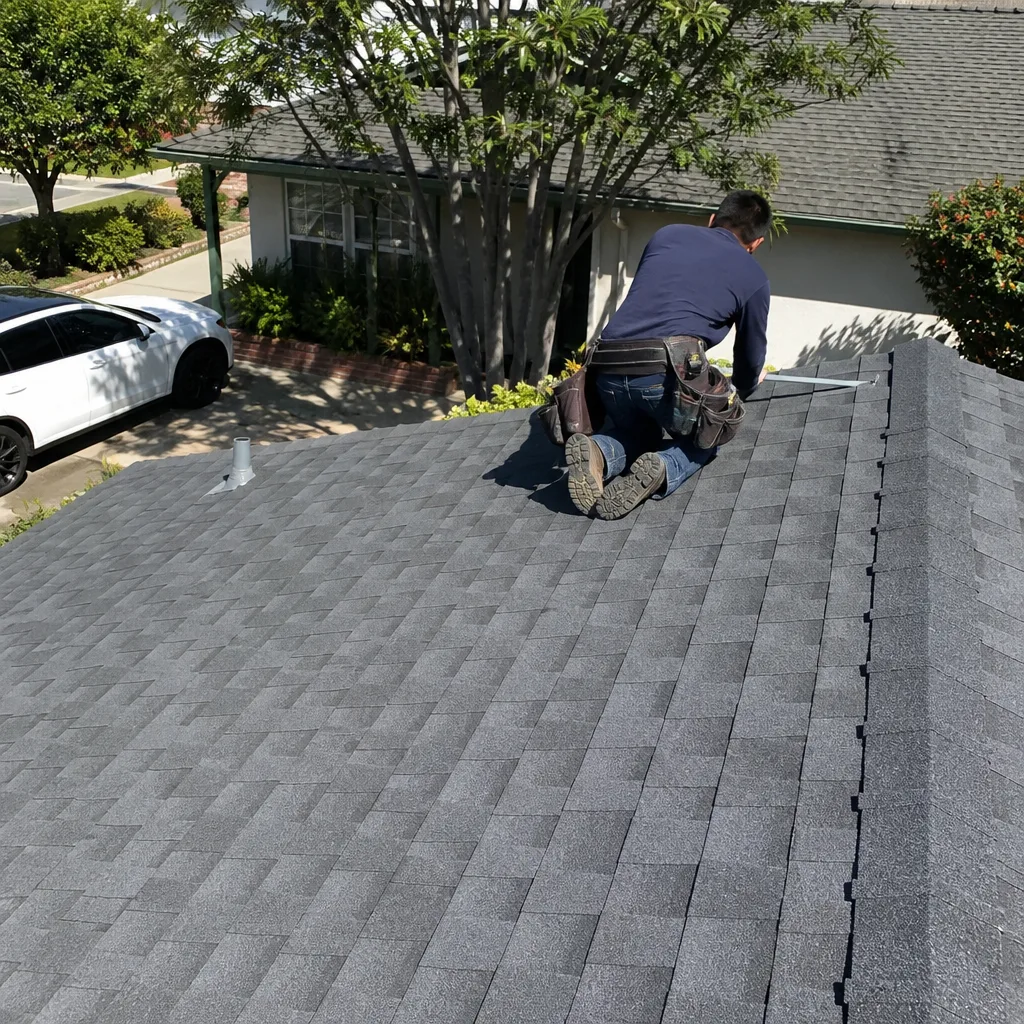
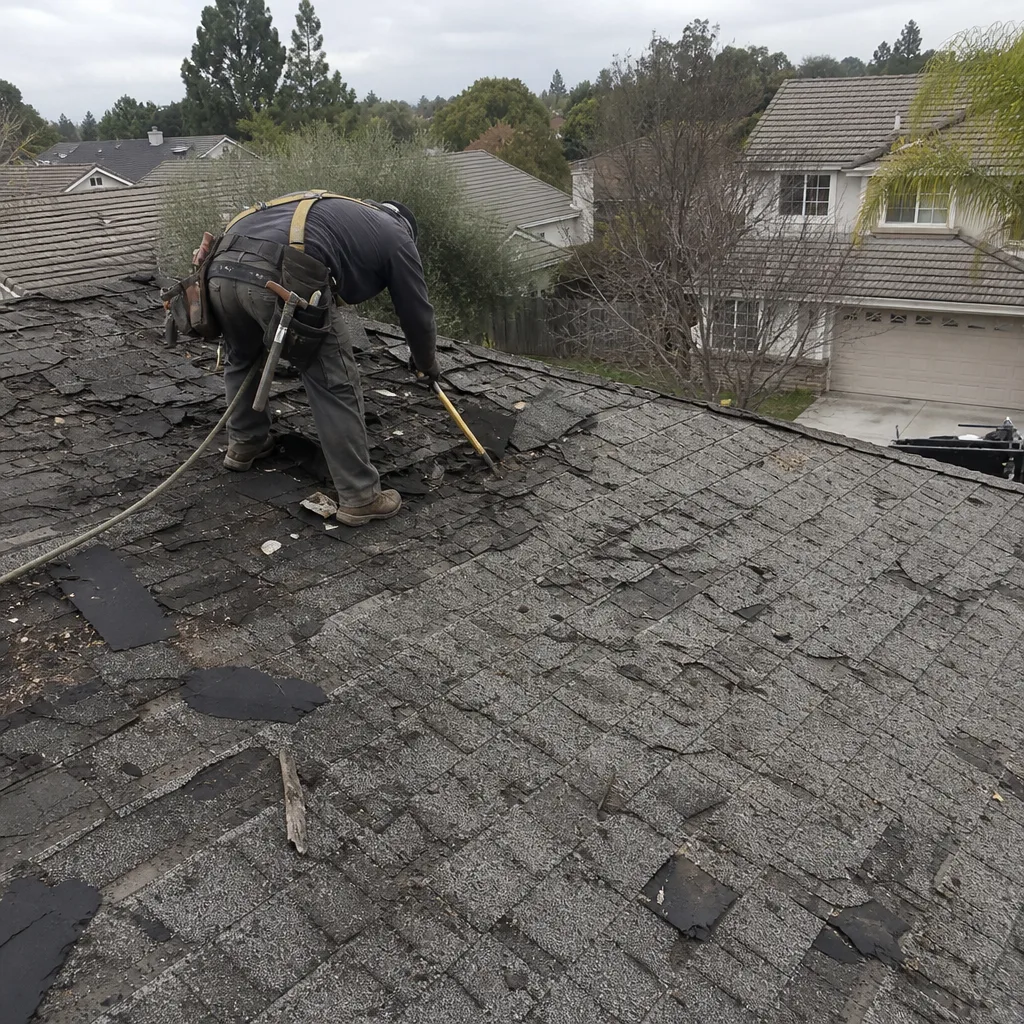
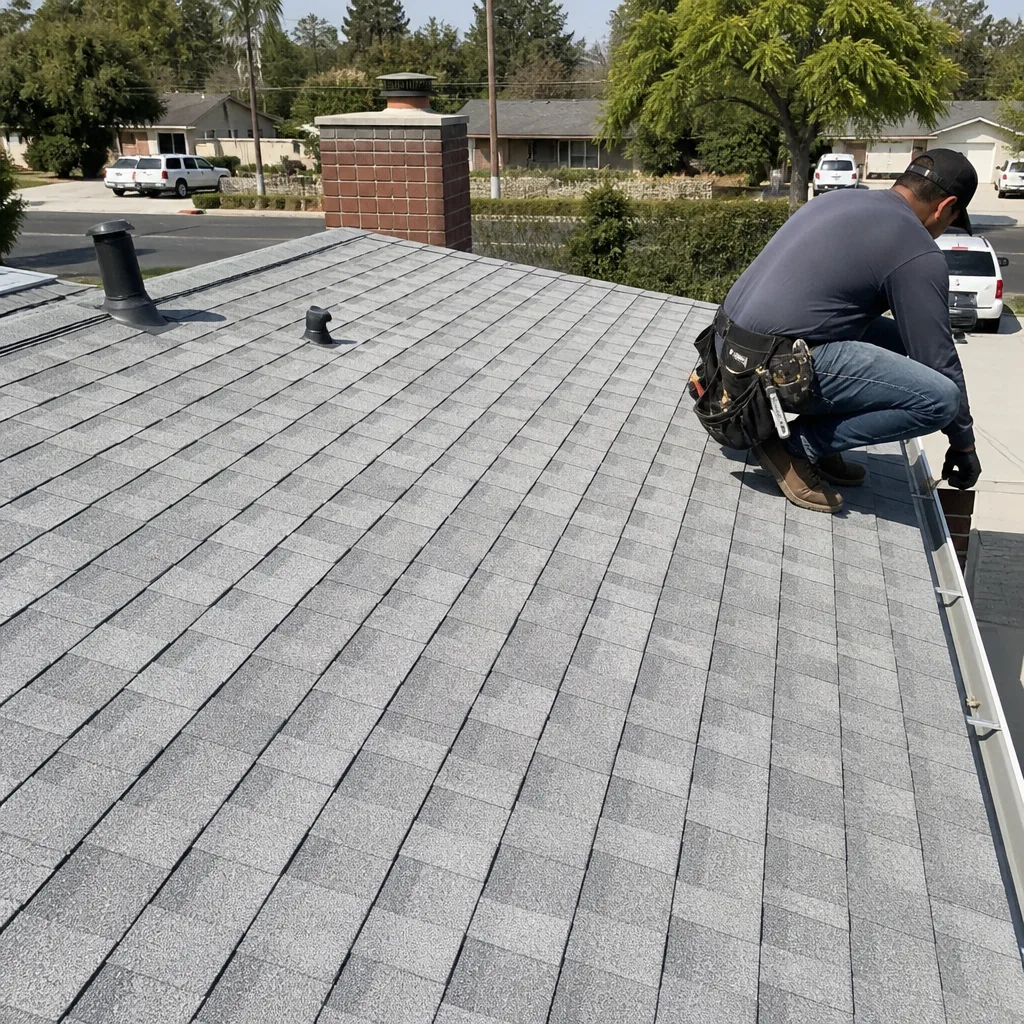
See the difference
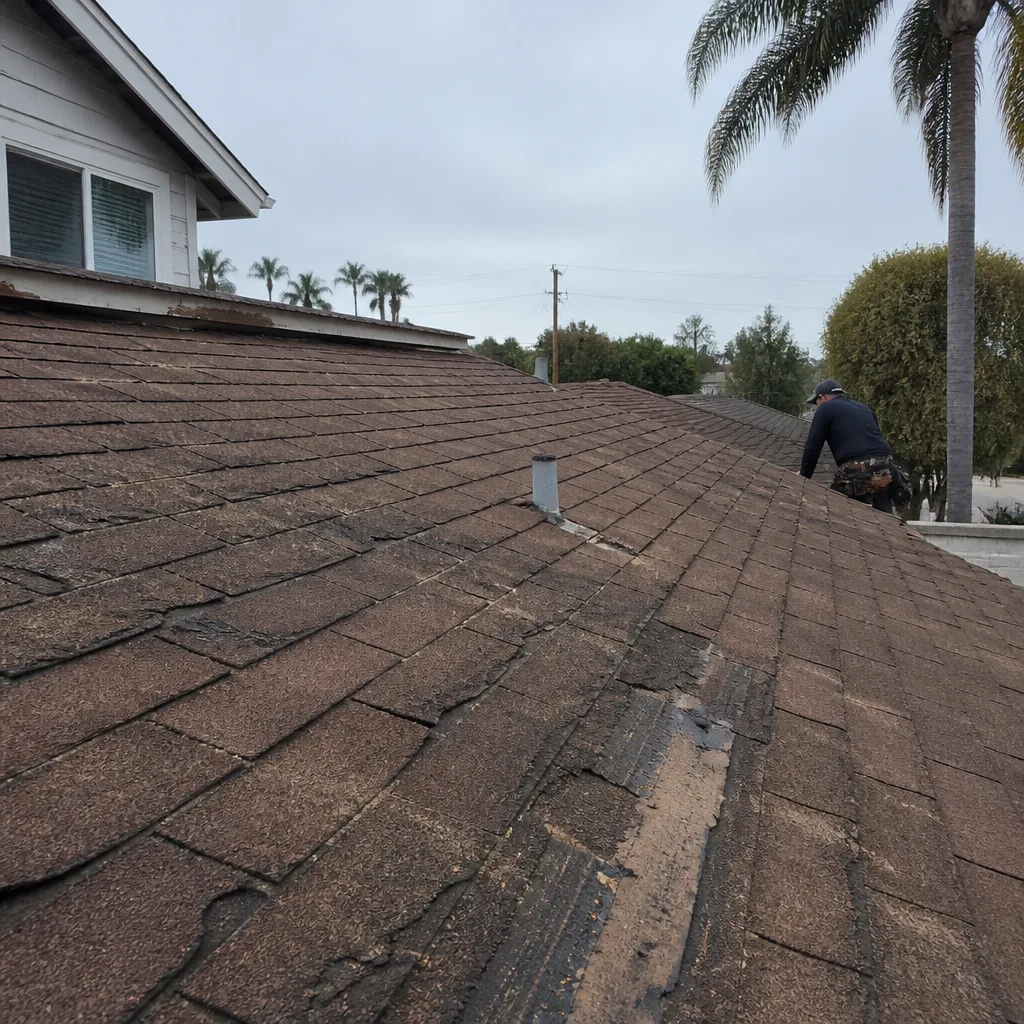 Before
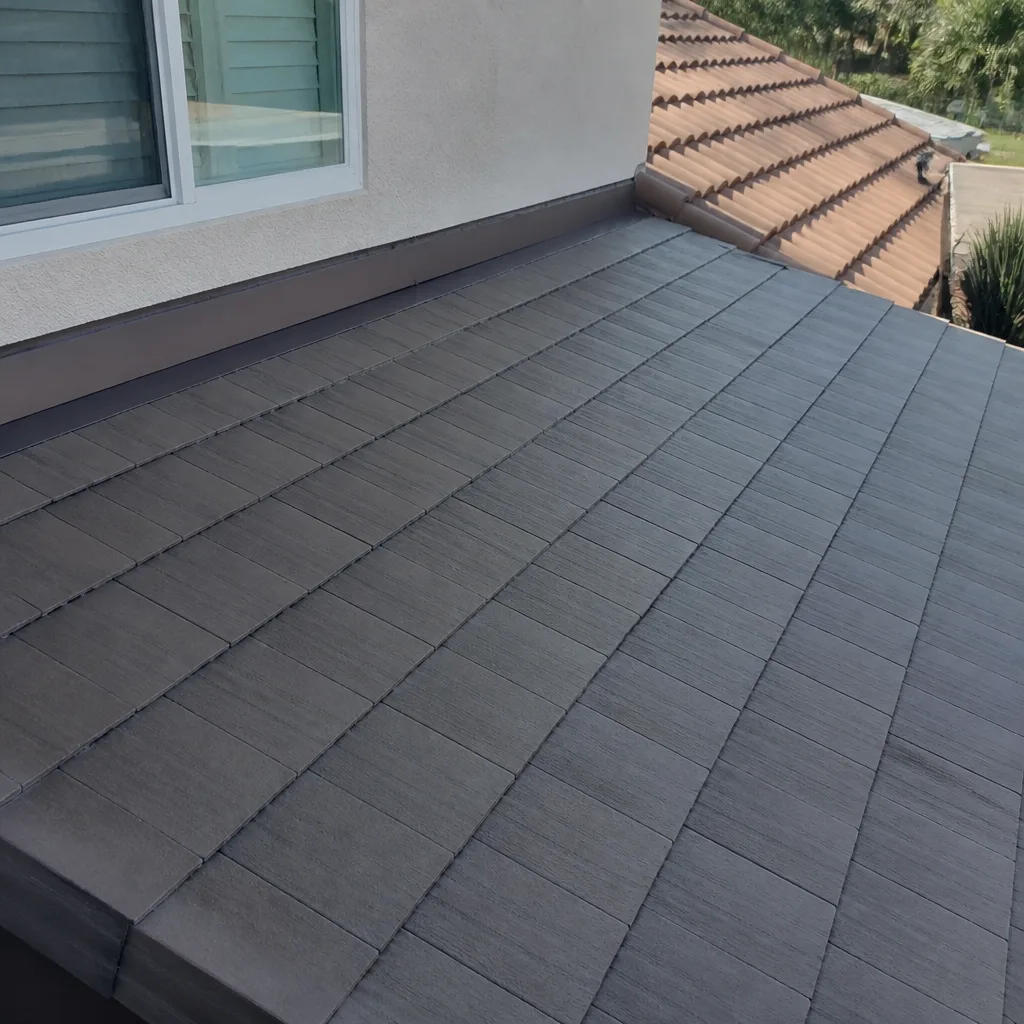 After
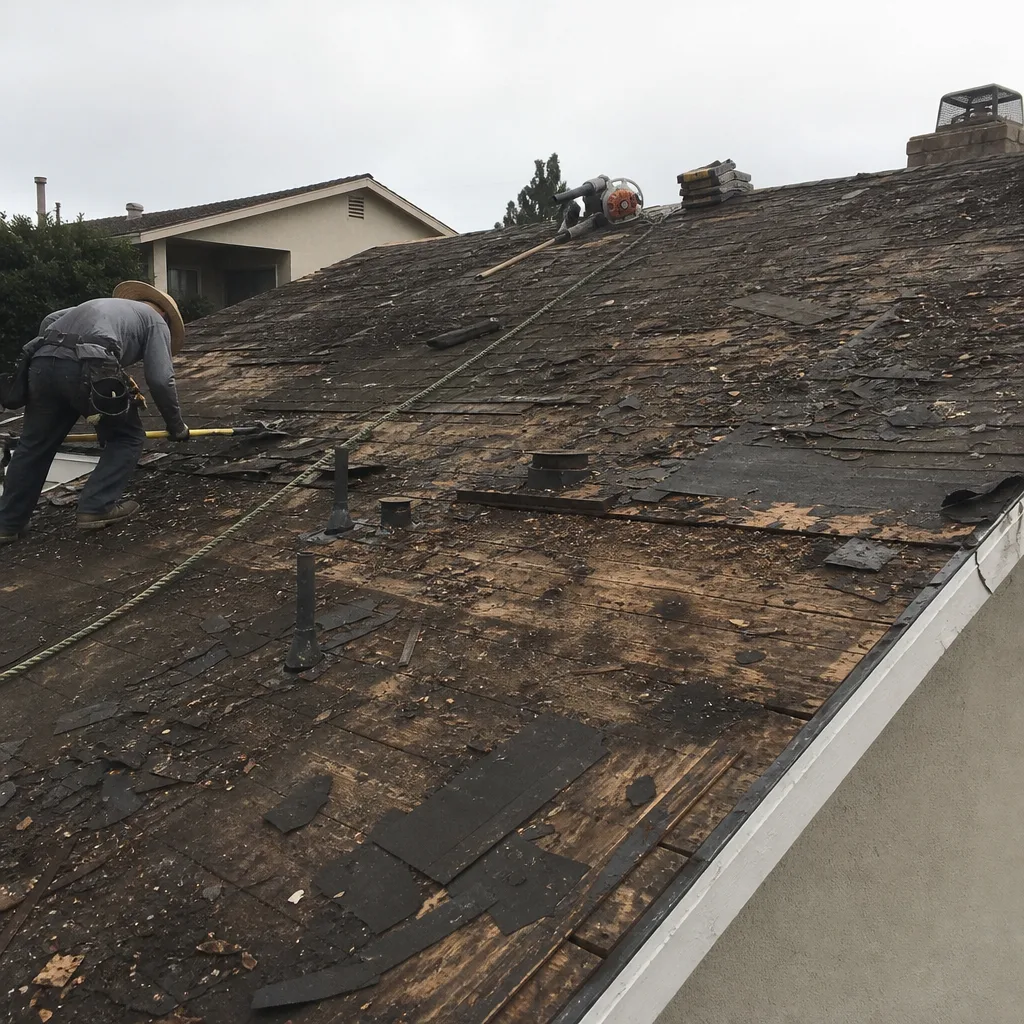 Before
 After
 Before
 After
When to Call a Professional
You don’t need a leak to need a roofer. If your shingles are curling at the edges in direct Westminster sun, if granules are collecting in the gutter after every rain, if you’re seeing water stains on the ceiling or daylight through the attic deck, or if the roof is past its 15th year and you’ve never had a professional assessment, the time to call is now. Roof damage accelerates, and a $600 repair deferred becomes a $4,000 deck replacement when the rot spreads. Select Roof Repair offers free estimates in Westminster; call (855) 382-0485 and we’ll tell you what you’re actually looking at, whether that’s a repair or a replacement or just peace of mind that the roof has years left.
Frequently Asked Questions
Go to the CSLB website, enter the contractor’s license number, and confirm the classification is C-39 and the license is active with no disciplinary actions. The CSLB database also shows the license issue date and any workers’ comp exemptions. A license number printed on an estimate is not verification; check it yourself.
A composition shingle roof replacement in Westminster typically runs between $9,000 and $18,000 depending on square footage, tear-off complexity, deck repairs, and material grade. Tile and flat-membrane systems run higher. The variables are specific enough that any single number without a roof inspection is a guess. Get a line-item estimate and compare materials, not just totals.
An estimate is an approximation based on visible conditions; a quote is a fixed price based on a verified scope. A contractor who provides a quote without opening an inspection hole or walking the roof carefully is guessing. A quote should hold firm unless new conditions surface during tear-off, and those should trigger a written change order, not a surprise at the end.
We install and work with products from seven manufacturer brands: GAF, CertainTeed, Owens Corning, IKO, Atlas, Tamko, and Boral. We don’t hold an exclusive contract with any single manufacturer, which means the material recommendation you get is matched to your home and budget rather than to whatever one brand we’re obligated to sell.
A thorough roof inspection takes 45 to 90 minutes, depending on roof size, complexity, and the number of penetrations. The inspector should walk the roof, photograph the work area, check flashing and sealant around every penetration, and document the attic from inside. A 15-minute “inspection” that ends with a replacement quote isn’t an inspection.
You should get at least two bids, and when you compare them, compare line items, not bottom lines. Three bids are useful only if all three specify materials to the same detail level. If one bid is 30% lower than the others and the line items are vague, you’re not comparing the same roof.
The Bottom Line
Hiring a roofing contractor in Westminster is not about finding the cheapest bid or the biggest brand name. It’s about finding someone who can prove they know roofing specifically, who will specify materials to the product code, who will honor California’s deposit cap law, and who will give you a diagnosis before a sales pitch. The five interview questions in this guide will filter out most generalists in one meeting. The estimate line-by-line walkthrough will filter out the material swappers. And the payment schedule structure will protect you from the moment you sign. Start with an inspection. Ask for details. Verify the license. Then decide.
Written by the team at Select Roof Repair, serving Westminster since 2018.