
Last updated October 30, 2026
 Metal roofing
 Architectural shingles
 Tile roofing
 GAF
 Owens Corning
 Flat & low-slope
Free roof inspection with deck photos before we talk money - GAF and Owens Corning certified installation
Roofing Warning Signs: A Westminster Homeowner’s Reference Guide
Here’s a counterintuitive fact we’ve learned from inspecting thousands of roofs across Westminster: the granule pile in your downspout cleanout isn’t a warning sign. It’s a late-stage symptom. By the time enough granules have sloughed off to visibly accumulate, the shingle’s protective layer is largely spent, and you’re months past the point where a minor repair would have solved the problem. The real warning sign appeared much earlier, and it was visible from the street the whole time. Our complete guide to roofing in Westminster is built around that gap between early detectability and expensive consequence. We’re going to teach you the subtle signals, specific to Westminster’s climate and housing stock, that show up 12 to 36 months before most homeowners ever think to call a roofer. You’ll learn what to look for from the ground, what interior clues mean what, how to read concrete tile, and how to triage what you find.
Quick Answer
The most common early roofing warning signs in Westminster are visual irregularities you can spot from the ground, as covered in our Seasonal Roofing Care for Westminster: Year-Round Homeowner’s Guide: uneven granule color banding on shingle planes, sagging fascia shadows, gutter separation at specific points, and interior attic condensation patterns that homeowners often misattribute to HVAC or insulation problems. These signals typically appear one to three years before active leaks or structural damage, which makes early recognition the single most effective way to control long-term roofing costs in Westminster’s sun-heavy climate.
Styles & brands we work with
Table of Contents
- Ground-Level Signals: What the Street View Tells You
- Interior Warning Signs Westminster Homeowners Misread
- Concrete Tile: Normal Weathering vs. Active Failure
- Flat and Low-Slope Sections: The Mid-Century Addition Problem
- The Triage Framework: Monitor, Schedule, or Call Now
- Why Westminster’s Climate Accelerates Roof Aging
- Common Mistakes to Avoid
- When to Call a Professional
- Frequently Asked Questions
Ground-Level Signals: What the Street View Tells You
Most guide articles tell you to climb a ladder and inspect shingles up close. We’re not going to do that. In Westminster, the vast majority of early warning signs are visible from the sidewalk or your driveway, and recognizing them requires no more than knowing what a healthy roof plane should look like. A roof that’s aging normally looks uniform from the street. A roof that’s telling you something looks uneven, and that unevenness takes three specific forms.
Color banding is the earliest and most commonly missed signal on asphalt shingle roofs. Each shingle has a granule layer that protects the asphalt binder from UV radiation. In Westminster, where we routinely see 280-plus days of direct sun per year, UV exposure is the primary agent of roof degradation, not rain. When the binder begins breaking down on a particular plane, the granules loosen unevenly, creating visible bands or patches where the shingle color looks lighter, washed out, or slightly different from the surrounding area. Homeowners often assume this is just dirt or shadow, but on a three-tab or architectural shingle roof, true color banding is the first visible sign that the UV-stabilizing compounds in the shingle are failing. And it happens asymmetrically. The south-facing and west-facing planes in Westminster degrade faster than north-facing ones, so the first band you’ll notice is typically on the side of your house that gets the afternoon sun.
Sagging fascia shadows are the second street-visible indicator. The fascia is the vertical board that runs along the roof’s edge, and in healthy roofs, it presents as a straight, crisp line that tracks the eave. When decking beneath the shingles or tile begins to retain moisture, or when the underlying framing settles unevenly due to water intrusion, the fascia line loses its straightness. From the street, look along the eave and watch for a subtle dip or wave in what should be a clean horizontal or raked line. The easiest way to catch this is to look at your roof on a bright day when shadows are pronounced. A sagging fascia shadow typically indicates water has been working somewhere in that roof section, often for months before it becomes visible. On asbestos-cement shingle or older composition roofs common in Westminster’s original 1950s and 1960s neighborhoods, this sag can be especially pronounced because the original framing was designed for lighter materials than what’s on the roof now.
Gutter separation patterns are the third and most overlooked signal. Gutters don’t pull away from fascia boards randomly. When you see a section of gutter that’s opened up a quarter-inch gap at the back, or a downspout that’s leaning away from the wall at a angle that seemed to appear over a single season, the cause is usually water that’s been getting behind the gutter, into the fascia, and swelling or rotting the wood that anchors the gutter brackets. In Westminster, the freeze-thaw cycle is less dramatic than in mountain communities, but the thermal expansion of metal gutters under direct Colorado sun combined with the occasional hard freeze is enough to loosen brackets that are anchored into compromised wood. The key diagnostic point: if the separation is on one side of the house or at one specific point along the eave, it’s likely moisture-related. If it’s uniform across the entire gutter run, it’s more likely an installation or aging bracket issue.
One more ground-level signal that deserves mention: flashing shadow lines. Step flashing and counter-flashing are the metal pieces that seal the joints where your roof meets a wall, chimney, or dormer. In proper light, these should present as crisp, dark lines against the roofing material. When the flashing begins to lift, or when the sealant behind it fails, you’ll often see a slight irregularity in that shadow line from the ground: a corner that catches light differently, a section that looks wavy, or a visible gap at the top edge. This is an early warning sign that the Roof Repair in Westminster we perform most frequently stems from: flashing failures that were visible months before the leak.
These three signals are worth knowing because they require no ladder, no special equipment, and about five minutes of looking at your house from across the street. If you see any of them, the next step is not panic. It’s a closer look at the interior signals that tell you whether what you’re seeing from the street is active or historical.
Interior Warning Signs Westminster Homeowners Misread
Westminster homes face a particular challenge when it comes to interior warning signs: our dry climate means that roof leaks often don’t present as dripping water. Instead, they present as condensation, staining, or temperature differentials that homeowners attribute to HVAC problems, poor insulation, or general humidity. Here’s what to look for, room by room, and what each pattern actually indicates about the failure point above.
Attic condensation patterns are the single most misread interior warning sign in Westminster. In a healthy attic, condensation forms symmetrically or not at all. When condensation appears consistently on one side of the attic, on one section of the sheathing, or around one specific rafter bay, you’re looking at a roof leak that’s been evaporating and re-condensing rather than dripping through. The moisture enters through a compromised point in the roofing material, travels along the underside of the decking, and condenses when the attic cools at night. The pattern it leaves looks different from general humidity condensation: it’s localized, it recurs in the same spot regardless of outdoor humidity, and it often appears on the underside of the roof decking before it appears on insulation or stored items. If you’re seeing repeated condensation in one attic corner, you’re not looking at a ventilation problem. You’re looking at water getting in above that corner.
Drywall staining shapes are another interior clue with specific meaning. A roof leak that penetrates the ceiling has to travel, and the shape of the stain it leaves tells you something about where the water entered. A single circular stain that grows during rainstorms typically indicates a point-source penetration: a nail pop, a cracked shingle, a failed pipe boot. A stain that appears as a line or a series of connected blotches along a ceiling joist usually indicates water that’s been traveling along framing from a point higher up the roof. A stain that appears at the top of a wall below a dormer or chimney often means the flashing at that junction is failing, not the main roof plane. In Westminster, where hail events can crack the underside of shingles without visible surface damage, interior staining sometimes appears weeks after the causal event, which makes it harder for homeowners to connect the stain to a specific storm. When you see a stain, take a photo of the shape, note when it changes, and call a roofer with those specifics. The information in that stain pattern is diagnostic gold.
Nail pops in ceilings and door or window binding are the third category of interior signals that point to roof problems rather than foundation or humidity issues. When decking beneath a roof gets wet repeatedly, it swells and contracts with the seasonal temperature cycles. Over time, that movement can telegraph down through the framing and cause drywall nails or screws to pop along ceiling lines. It can also cause doors and windows to bind at specific times of year. The key diagnostic distinction: if the binding is seasonal and affects only rooms on one side of the house, particularly below the roof slope that gets the most sun or the most weather, consider roof movement as a cause. This is especially true in Westminster’s older neighborhoods with original framing, where decking movement from roof leaks is a well-documented cause of interior finish issues.
We want to be direct about one thing: none of these interior signs proves a roof leak by itself. But taken together, or taken in combination with the ground-level signals from the previous section, they form a pattern that’s clear enough to act on. The goal of this guide is pattern recognition, and the pattern that matters most is the combination of a ground-level irregularity and the matching interior symptom in the same section of the house.
Concrete Tile: Normal Weathering vs. Active Failure
Concrete tile is the most common roofing material on Westminster’s original housing stock, and it comes with a problem that most online guide articles—and even some buyer’s guides for choosing roofing brands in Westminster—don’t address: distinguishing normal weathering from active failure. Concrete tile is designed to last fifty years or more, but it doesn’t stay pristine the entire time. It weathers, and the difference between weathering you should monitor and failure you should act on is the difference between a tile’s surface appearance and its structural function.
Normal weathering on concrete tile shows up as efflorescence, a white, chalky surface deposit that forms when water moves through the tile and carries naturally occurring salts to the surface. In Westminster’s dry climate, efflorescence is common, and it’s entirely cosmetic. Similarly, surface color fading from UV exposure is normal and expected. A concrete tile that’s been on a Westminster roof for twenty years will be lighter than a new one, particularly on south-facing planes, and that fading does not affect the tile’s performance. Hairline surface cracks, less than half the thickness of the tile, also appear on many older tile roofs and are usually stable. These are conditions you monitor, not repair.
Active failure looks different. The indicators that matter are:
- Spalling: When pieces of the tile surface flake off, leaving a pitted, rough texture, the tile is losing structural integrity. Spalling on multiple tiles on the same plane indicates the tile is nearing the end of its serviceable life.
- Through-cracks: A crack that goes completely through the tile, visible from the underside or audible when you tap the tile gently with a non-metallic object, means that tile is no longer shedding water effectively.
- Tile displacement: A tile that has shifted, lifted, or rotated out of position, especially at hips, ridges, or valleys, exposes the underlying felt or battens and should be addressed within thirty days, regardless of whether the weather forecast includes rain.
- Broken corners or edges on multiple adjacent tiles: Single broken corners are often installation damage from a previous repair. Multiple tiles with broken corners in one area suggest impact damage from hail or falling debris, and the tiles beneath that area should be inspected for cracks as well.
For Westminster homeowners with concrete tile, the actionable advice is this: inspect your roof from the ground after any significant hailstorm, looking for displaced or visibly cracked tiles. Most homeowner insurance policies in this region have specific provisions for hail damage to concrete tile, and the statute of limitations for filing a claim is based on the date the damage was discovered, not the date it occurred. That’s a Colorado-specific nuance that many homeowners don’t learn until after the window has closed.
Flat and Low-Slope Sections: The Mid-Century Addition Problem
Westminster’s post-war building boom produced a lot of houses with pitched main roofs and flat or low-slope sections over additions, porches, carports, and sunrooms. These sections fail differently from pitched roofs, and the warning signs are entirely different. If your home has a flat section, this part of the guide is written for you.
On a pitched roof, water flows off. On a flat or low-slope roof, water stands, at least temporarily. The first warning sign on any flat roof is ponding water that persists longer than 48 hours after a rain event. Some ponding is normal immediately after rain, but water that’s still sitting two days later is a problem. It means the roof’s drainage is insufficient, and every additional hour of standing water adds stress to the membrane, accelerates UV degradation at the waterline, and eventually compromises the seams. In Westminster’s summer heat, a ponded area heats and cools at a different rate than the surrounding membrane, which causes thermal movement and seam separation over time.
The second flat-roof signal is membrane blistering. Blisters are raised areas where the membrane has separated from the substrate beneath it. They form when moisture gets trapped between layers of the roofing system, heats up in the sun, and expands as vapor. From the ground or from a window above the flat section, blisters look like bubbles or raised ridges in what should be a smooth surface. Small blisters are common on older built-up roofs and can be stable for years. Blisters larger than a few inches in diameter, or clusters of blisters in an area that also shows ponding, are active failure indicators. Blisters eventually crack, and a cracked blister is a direct water entry point.
The third signal is specific to seam separation at the parapet walls and penetrations. On flat roofs, the weak points are always where the membrane turns up against a wall or wraps around a pipe, vent, or skylight. Look for gaps, lifting, or visible cracking at these transition points. On older torch-down or modified bitumen roofs, seam separation often starts at the corners of penetrations where thermal movement is greatest. A small gap at a pipe boot on a flat roof is more serious than the equivalent gap on a pitched roof because water on a flat roof has time to find that gap and work through it.
If you have a flat section on your Westminster home and you haven’t had it inspected in the last five years, schedule an Roof Inspection in Westminster before the next rainy season. Flat roofs fail faster than pitched roofs, and the repairs are cheaper before the first active leak than after.
The Triage Framework: Monitor, Schedule, or Call Now
Once you’ve spotted a warning sign, the next question is what to do about it. Not every signal demands immediate action, and reacting to every minor irregularity as if it were an emergency leads to unnecessary expense and unnecessary replacement. Here’s a practical framework, based on what we tell Westminster homeowners every week.
Category 1: Monitor It
These are warning signs that warrant periodic observation but not immediate action. They include: uniform surface fading on concrete tile, mild efflorescence, small and stable blisters on flat sections, hairline surface cracks on individual tiles, and minor color variation on shingles that hasn’t changed in six months or more. The action is simple: take a photo now, take another one in three to six months, and compare. If nothing has changed, you monitor again. If something has changed, you move to Category 2.
Category 2: Schedule a Repair Within 30 Days
These signals indicate active but not urgent deterioration. They include: visible color banding on shingles that has changed within the last year, sagging fascia shadows that are new or worsening, gutter separation at specific points, localized attic condensation that recurs in the same spot, a single through-crack on one or two concrete tiles, blisters larger than a few inches on a flat roof, or drywall staining that’s small, stable, and not growing during rain events. None of these requires an emergency call. All of them should be addressed within a month because they are progressing, and the progression only moves in one direction. A repair scheduled early in this window is usually a minor job. A repair delayed past it can become a replacement conversation.
Category 3: Stop Reading and Call Now
These signals demand immediate professional attention. They include: water actively dripping into living space, a stain that grows or darkens during rain, a sagging plane visible from the street, multiple displaced concrete tiles after a storm, membrane that’s visibly cracked or separated on a flat roof, or any sign that the roof structure itself is moving. In these situations, the damage is already active, and every additional weather cycle is compounding it. Call a roofer today. A cautionary note: any repair that involves accessing a sagging or unstable section should be handled by a professional. Never walk on a roof that’s showing signs of structural movement.
Why Westminster’s Climate Accelerates Roof Aging
Roofing advice that’s written for a generic national audience misses the single most important variable in Westminster: our specific combination of high UV exposure, low humidity, and rapid temperature swings. These factors don’t just affect how roofs age. They affect which warning signs appear first, which makes local knowledge a prerequisite for accurate diagnosis.
UV exposure is the dominant factor for most Westminster roofs. We receive more than 300 days of sunshine per year in many years, and the altitude intensifies UV radiation compared to sea level. This means asphalt shingles in Westminster lose their granule adhesion faster than shingles in more northern or more coastal climates. It also means the binder breakdown that produces color banding appears earlier in the roof’s life than it would elsewhere. A 15-year-old asphalt shingle roof in Westminster can show UV damage that a 20-year-old roof in a cloudier climate wouldn’t show, and that’s not a quality issue with the shingle. It’s the environment.
The second factor is the daily temperature swing. In summer, a Westminster roof surface can reach 160 degrees on a 90-degree day. At night, it cools to 60 or 70 degrees. That’s a 100-degree daily cycle, and each cycle causes thermal expansion and contraction at every seam, every fastener, every flashing junction. Over years, these micro-movements loosen nails, stretch sealant, and create the gaps that eventually allow water in. The warning signs of thermal fatigue are the sagging fascia lines, the flashing shadow irregularities, and the gutter separation patterns we described in the first section. They’re all, at root, symptoms of movement at connection points.
The third factor is our hail season. Westminster sits in a hail corridor, and hail doesn’t just cause immediate, visible damage. It can cause micro-fractures in shingle matting and concrete tile that don’t show up as immediate leaks but weaken the material and accelerate UV degradation at the impact points. Two roofs on the same street can have entirely different wear profiles because one received a heavier hail exposure three years ago. This is why roof condition can’t be assessed by age alone, and why a Roof Replacement in Westminster decision should be based on actual condition, not on the calendar.
Understanding these local factors changes how you read the warning signs. What looks like premature wear on a Westminster roof is often just normal aging for this climate, compressed into fewer years. And what looks like stable weathering can hide impact damage from a storm you’ve forgotten about. The only way to know which is which is to look closely, and to get a professional assessment when the signs are ambiguous.
Common Mistakes to Avoid
- Waiting for a visible leak before addressing a warning sign. By the time water is dripping through your ceiling, the roof damage is typically months to years old, and the repair has moved from a flashing or single-shingle job to a decking and insulation job. In Westminster, the sun damage that produces visible granule loss and color banding happens long before the leak.
- Assuming concrete tile doesn’t need inspection. Concrete tile is long-lived, but it sits on an underlayment that ages faster than the tile itself. The tile can look fine while the underlayment beneath it is failing. Only an inspection that looks at the system, not just the visible surface, catches this.
- Attributing attic condensation to poor ventilation. As we covered in the interior signs section, localized, recurring condensation is more often a leak than a ventilation problem. Adding ventilation to an attic with a roof leak masks the symptom and lets the decking rot continue.
- Caulking or sealing visible gaps yourself. For any roofing material, a homeowner-applied sealant is almost never the same chemistry as the roofing system’s original materials. Worse, it can trap moisture that would otherwise evaporate. If the gap is small and the repair seems simple, have a professional do it with the correct matching material.
- Ignoring the flat section because it’s “just the porch.” Flat sections are the most failure-prone part of any roofing system, and failures there can migrate into the main structure. In Westminster’s mid-century homes, a porch roof leak that goes unaddressed can rot the beam that supports the main roof overhang.
- Replacing a roof based on a single estimate from a general contractor. Roofing is a specialized trade, and the material selection alone, across the brands we work with, including CertainTeed, Owens Corning, and IKO, requires trade-specific knowledge. A general contractor who “also does roofs” doesn’t see the range of failure modes a roofing-only specialist sees, and that shows up in their recommendations.
When to Call a Professional
You should call a professional whenever you’ve identified a Category 2 or Category 3 signal from the triage framework, or whenever you’ve seen a signal you can’t confidently categorize. A professional inspection answers the question the warning signs are pointing to: is this active failure, and if so, what’s the scope of the repair? At Select Roof Repair home, we approach every inspection with the same philosophy: the inspection exists to give you an honest diagnosis, not to sell you a replacement. Some inspection findings end with a recommendation to monitor. Some end with a small repair. Some end with a replacement conversation. Our only commitment, as a roofing-only company that works with materials from multiple manufacturers including Atlas and CertainTeed, is that the recommendation fits the actual condition of your roof. If you live in Westminster, Select Roof Repair offers free estimates in Westminster – call (855) 382-0485.
Frequently Asked Questions
Walk the perimeter and look at your roof from the street twice a year, ideally in spring and fall. For older roofs, or roofs with known issues, a professional inspection every two to three years is the right cadence. In Westminster’s hail climate, you should also do a visual check after any significant hailstorm, regardless of when your last inspection was.
Color banding on asphalt shingles, which appears as uneven, lighter patches you can see from the street. Most homeowners don’t notice it until the granule loss is far enough along to produce visible granules in the gutters, by which point the damage is more advanced. The banding appears six to twelve months before granule accumulation, and it’s visible whenever you look for it.
Yes. Most of the signals in this guide, including color banding, fascia shadow irregularities, gutter separation, and visible tile displacement, are observable from the ground. We recommend binoculars for closer looks at the ridge and flashing areas. A professional inspection uses tools and methods that are appropriate for the roof’s slope and condition, and should be your next step if your ground-level observations raise questions.
Document it with photos and note the date. Then, unless it’s a Category 3 signal, monitor it for one season before deciding whether to schedule an inspection. The key is to capture change: what’s stable can be monitored, and what’s progressing should be addressed. When in doubt, a professional inspection is the reliable way to determine which category your signal falls into.
Faster than in most climates, due to our high UV exposure and daily temperature swings. A small flashing gap that would take two years to become a leak in a milder climate can become a leak in one Westminster season. The progression from early warning sign to active failure is often 12 to 24 months in this area, which is why the monitoring window matters.
Yes. Inspection is a standalone service at Select Roof Repair, which means you can schedule an inspection to get an honest assessment of your roof’s condition without any obligation to proceed with repair or replacement. That’s how we’ve structured our work from the start: the diagnosis comes first, and the recommendation follows from what we find.
The Bottom Line
The pattern we’ve laid out in this guide is a shift in how to think about roof maintenance in Westminster. Most homeowners wait until a leak forces action, which means the damage is already significant and the cost is already high. Reading the earlier signals, the color banding, the fascia shadows, the gutter separation, the attic condensation patterns, is about moving the decision point forward by a year or two, to the window where a repair is still minor and a replacement is still avoidable. For more guides & resources, explore our blog, and start by looking at your roof from the street today. Note what you see. If something looks uneven, take a photo. If it changes, schedule the inspection. That’s the whole playbook, and it’s the cheapest roof maintenance strategy there is.
Written by the team at Select Roof Repair, serving Westminster since 2018.
See the difference
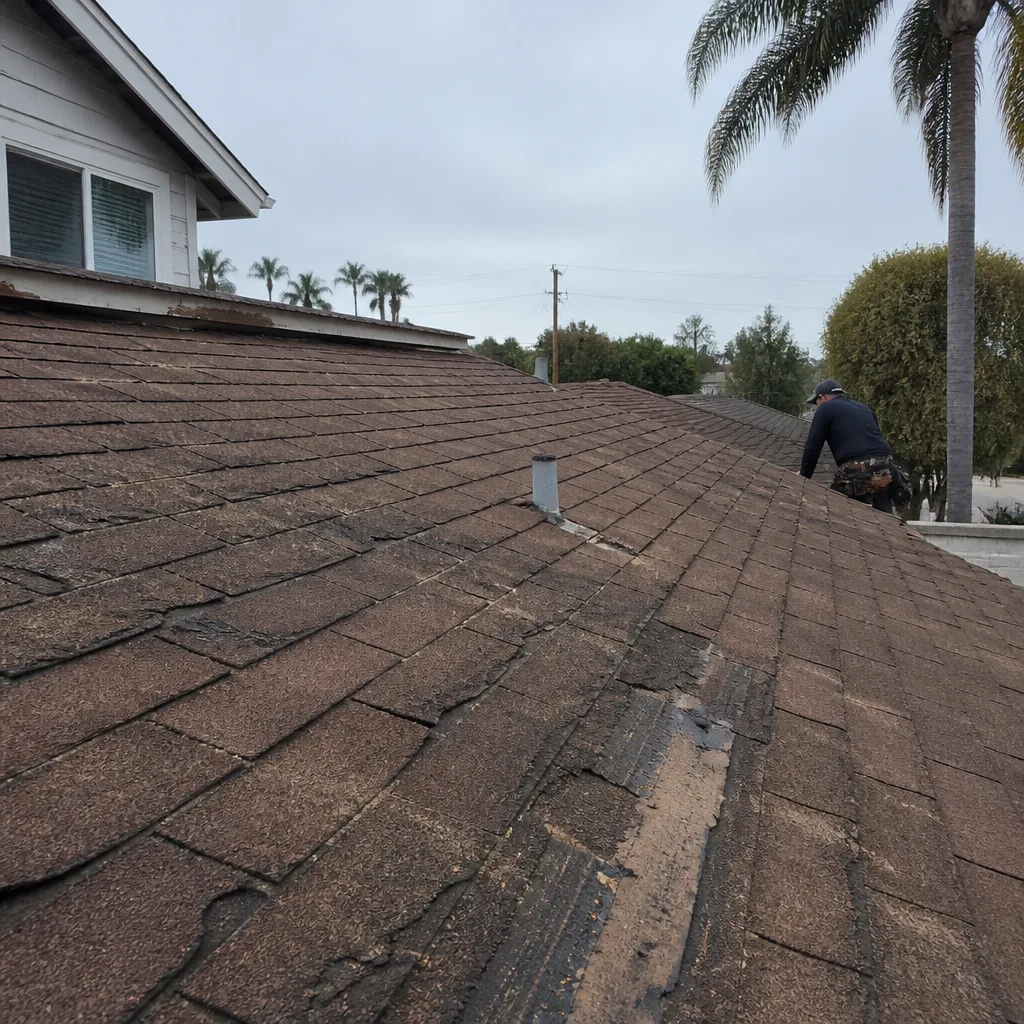 Before
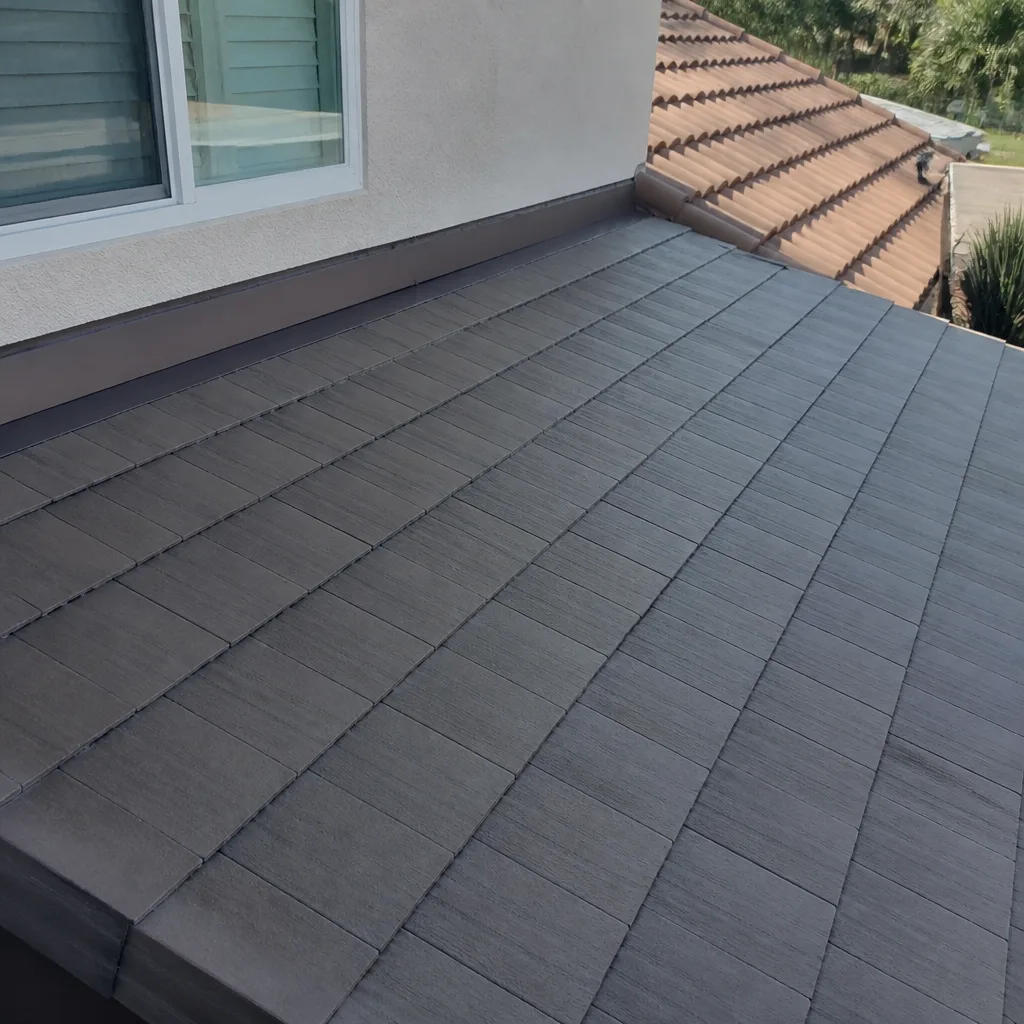 After
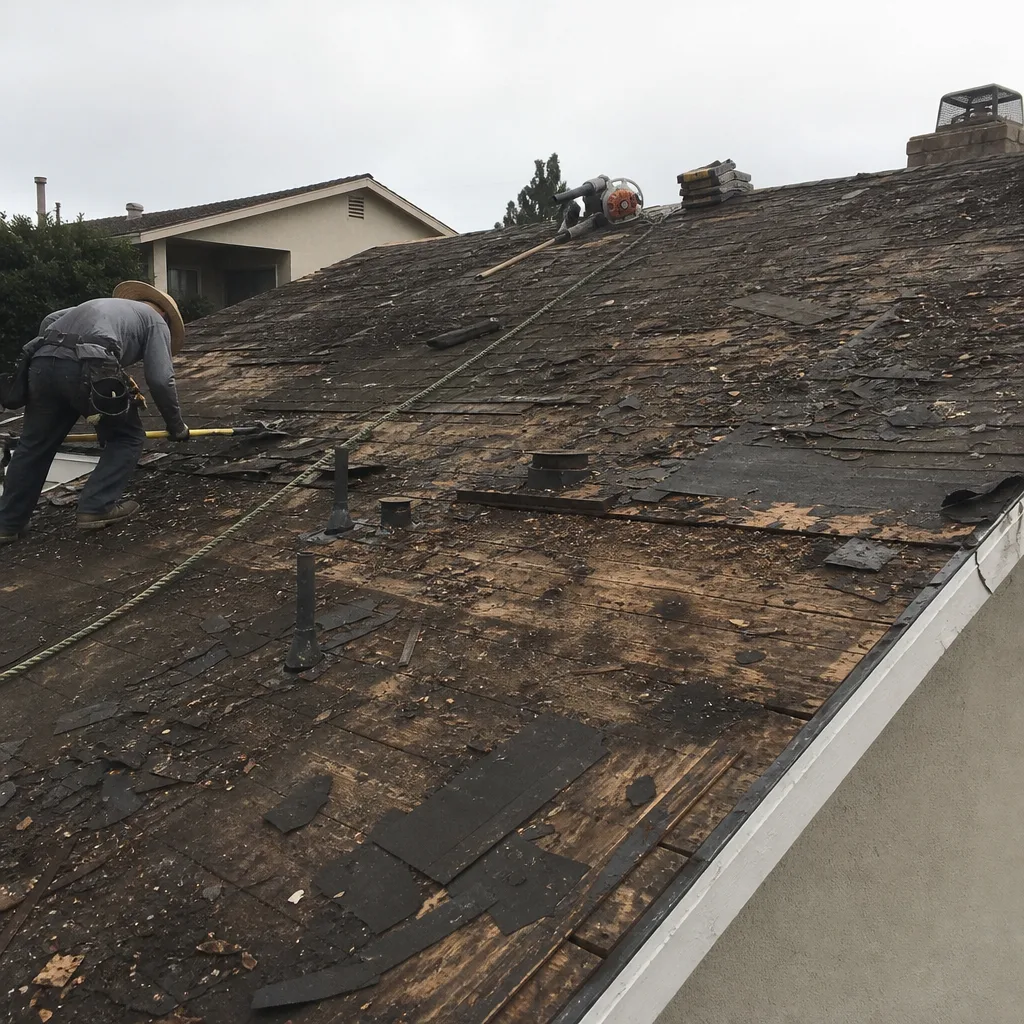 Before
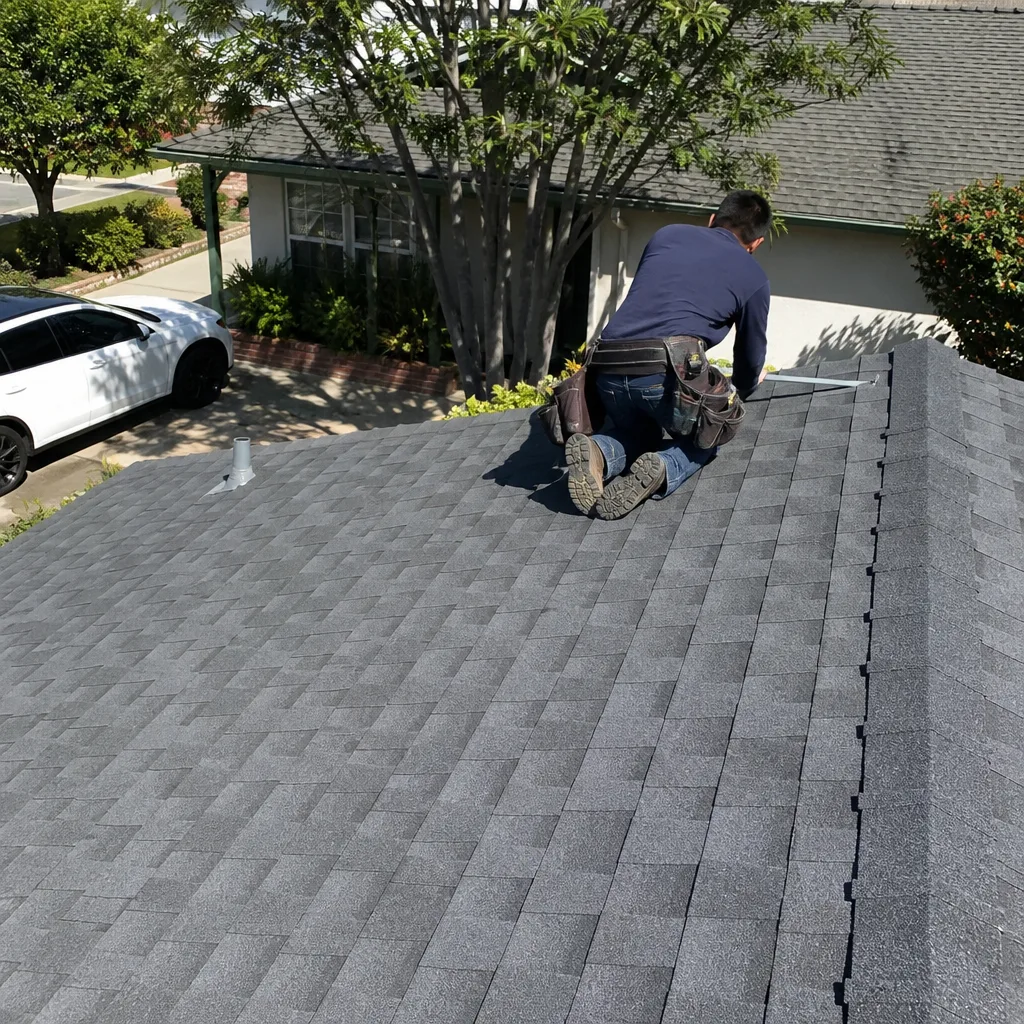 After
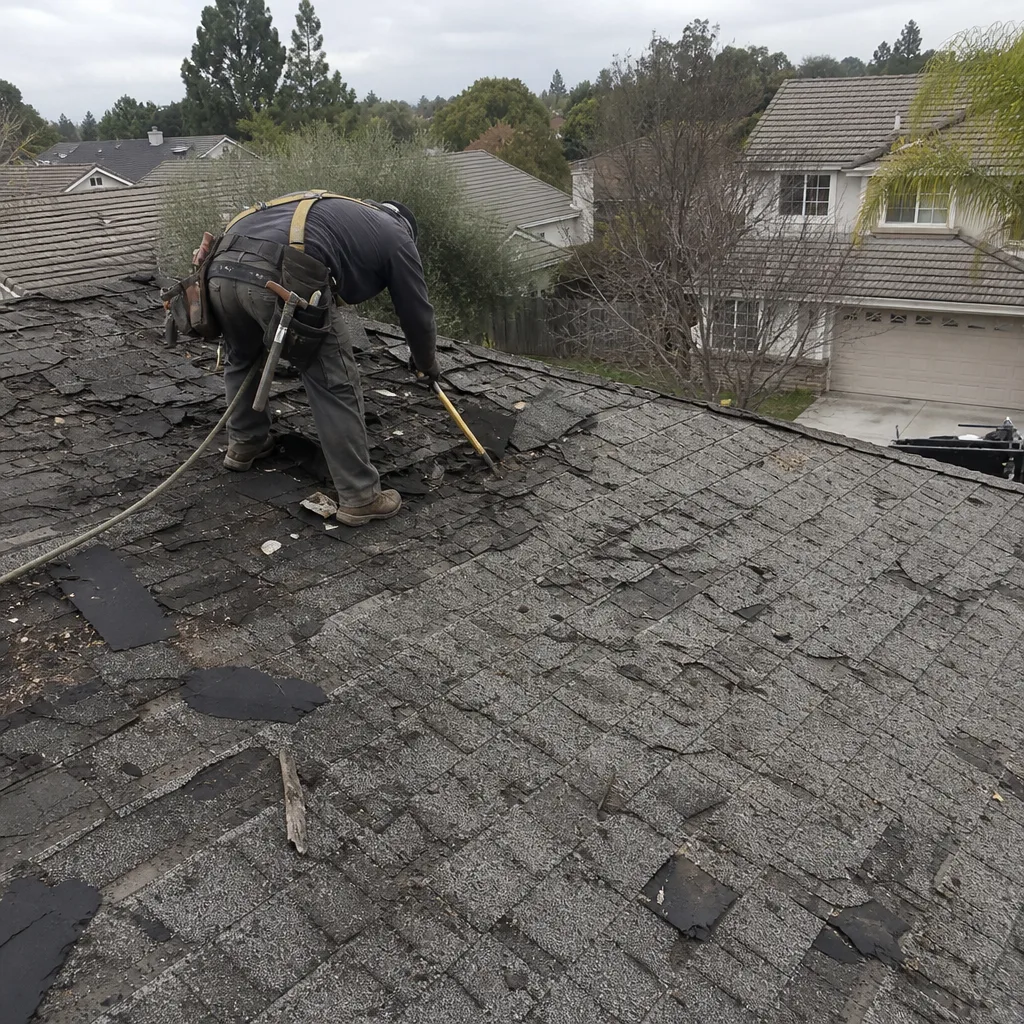 Before
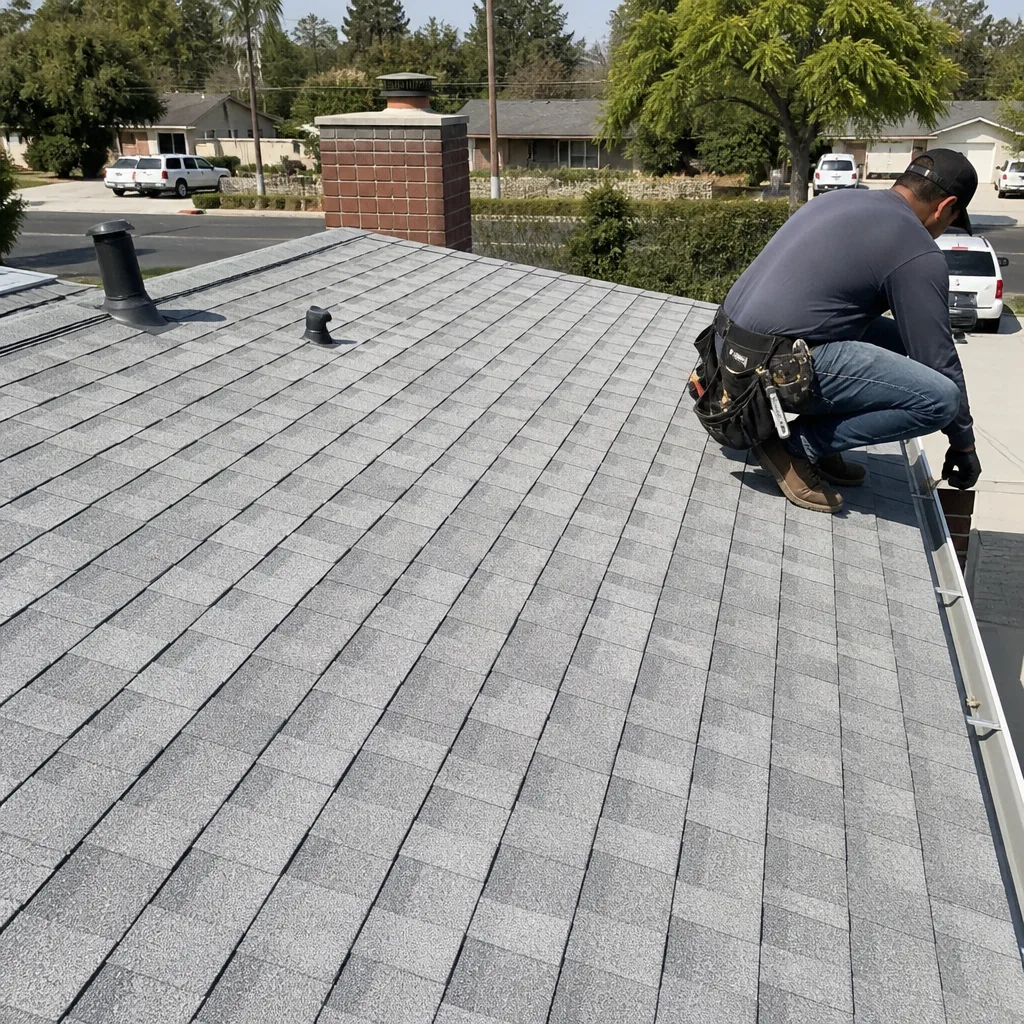 After